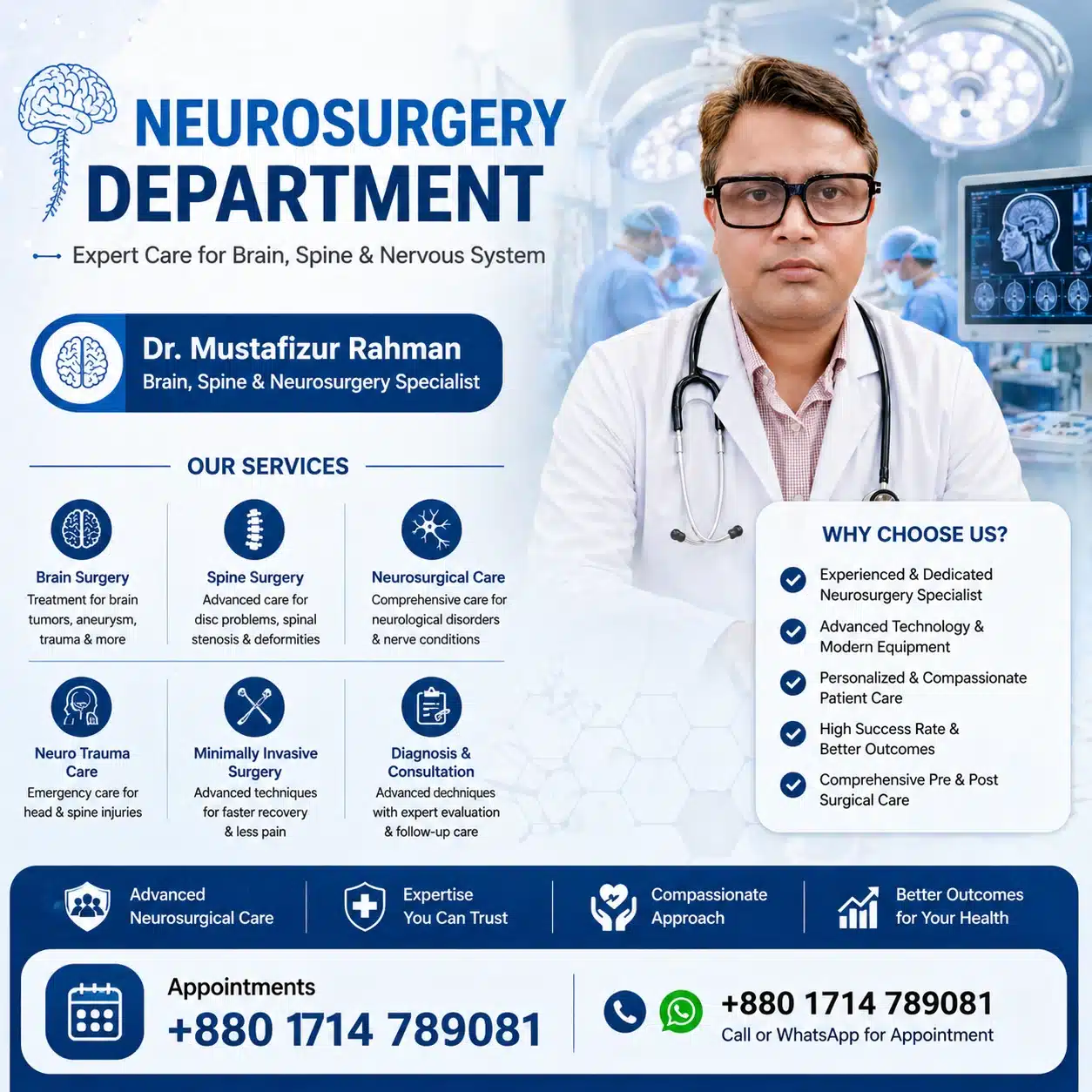
Neurosurgery Department
The Neurosurgery Department provides specialized evaluation, treatment, and surgical services for complex brain, nerve, and spine-related conditions.
About This Department
The Neurosurgery Department offers advanced evaluation, diagnosis, and treatment for complex neurological conditions related to the brain, spine, and nervous system. Services include modern procedures such as brain tumor surgery, spinal surgery, interventional neurosurgery, disc prolapse treatment, spine-related problems, nerve pain, stroke, paralysis, and other critical neurological disorders.
Patients are carefully assessed through necessary tests and investigations to ensure accurate diagnosis and personalized treatment planning. Depending on the condition, treatment options may include medication, monitoring, rehabilitation, or surgery.
At LabZone Hospital, the Neurosurgery Department prioritizes patient safety, quick recovery, modern facilities, and comprehensive care. Early consultation with a specialist for neurological symptoms can help reduce complications and improve recovery outcomes.
Key Treatments
- Brain tumor evaluation and surgical management
- Spine and interventional neurosurgery services
- Treatment of paralysis and complex neurological disorders
- Management of spinal problems
- Treatment of nerve pain, stroke, and paralysis
Department Information
Hospital: LabZone Hospital & Hormone Center
Department: Neurosurgery Department
Overview: Our Neurosurgery Department provides specialized care for the diagnosis and treatment of complex brain, nerve, and spinal disorders, including surgical interventions when necessary.
Key Treatments: Brain tumor evaluation and surgical management, , Spine and interventional neurosurgery services, , Treatment of paralysis and complex neurological disorders, , Management of spinal problems, , Treatment of nerve pain, stroke, and paralysis
Contact: 01714789081
WhatsApp: https://wa.me/8801714789081
Appointment: Click Here
Department Features
- Advanced diagnosis and treatment through experienced neurosurgeons
- Accurate disease detection and proper treatment planning
- Brain and spine surgery services
- Modern care for complex neurological conditions
- Complete pre- and post-operative patient monitoring
- Comprehensive care with necessary tests and investigations
Technology & Equipment
- Advanced diagnostic equipment and modern support systems
- Neurosurgical operation setup with state-of-the-art technology
- Modern facilities for treating complex neurological conditions
- Updated equipment for spine and brain surgery
- Necessary clinical support for proper patient monitoring
Why Choose This Department
Specialized care for complex neurological diseases
Patient-centered treatment planning and monitoring
Accurate diagnosis with modern technology
Experienced specialists and skilled medical team
Integrated services including diagnosis, treatment, and follow-up care
Why Choose Us
- Specialized neurosurgery services
- Disease-based personalized treatment plans
- Integrated care from consultation to follow-up
- Experienced doctors and support team
- Clear guidance for patients and their families
Common Conditions
Frequently Asked Questions
What types of diseases are treated in the Neurosurgery Department?
Complex conditions related to the brain, nerves, and spine such as head injury, brain tumors, spinal problems, disc prolapse, and nerve compression pain are treated.
Does every patient need surgery?
No, not all patients require surgery. Depending on the condition, severity, and reports, treatment may include medication, observation, physical management, or surgery.
When should I urgently consult a neurosurgeon?
You should seek urgent medical attention if you experience severe head injury, loss of consciousness, slurred speech, weakness or paralysis in limbs, severe headache, seizures, or rapidly worsening symptoms.
What tests may be required before neurosurgery treatment?
Depending on the symptoms, tests such as CT scan, MRI, blood tests, or other necessary investigations may be required. The doctor will determine the appropriate tests after evaluation.
Is follow-up necessary after surgery?
Yes, regular follow-up after surgery is very important, including medication, dressing, rest, movement, and rehabilitation planning.